Breakfast Cereals
Flakes, granola, muesli, porridge, puffed cereals, extruded cereals, and breakfast biscuits

Natural vitamin and mineral fortification for breakfast cereal manufacturers
Breakfast cereals invented mass-market vitamin fortification. Two decades of consumer education on ingredient labels have turned the synthetic vitamin codes that built the category into a commercial liability - parents reading the back of pack at the supermarket shelf are increasingly choosing the brands that have moved.
Dry blending into cereal production is one of the simplest fortification environments in food - no thermal processing, no degradation, no overage calculations required. For extruded and toasted formats, retention profiles up to 200°C are established through RSSL and Eurofins, with overages calculated per processing route by Eiméar.
Samples available on request. Reformulation support included with every order.
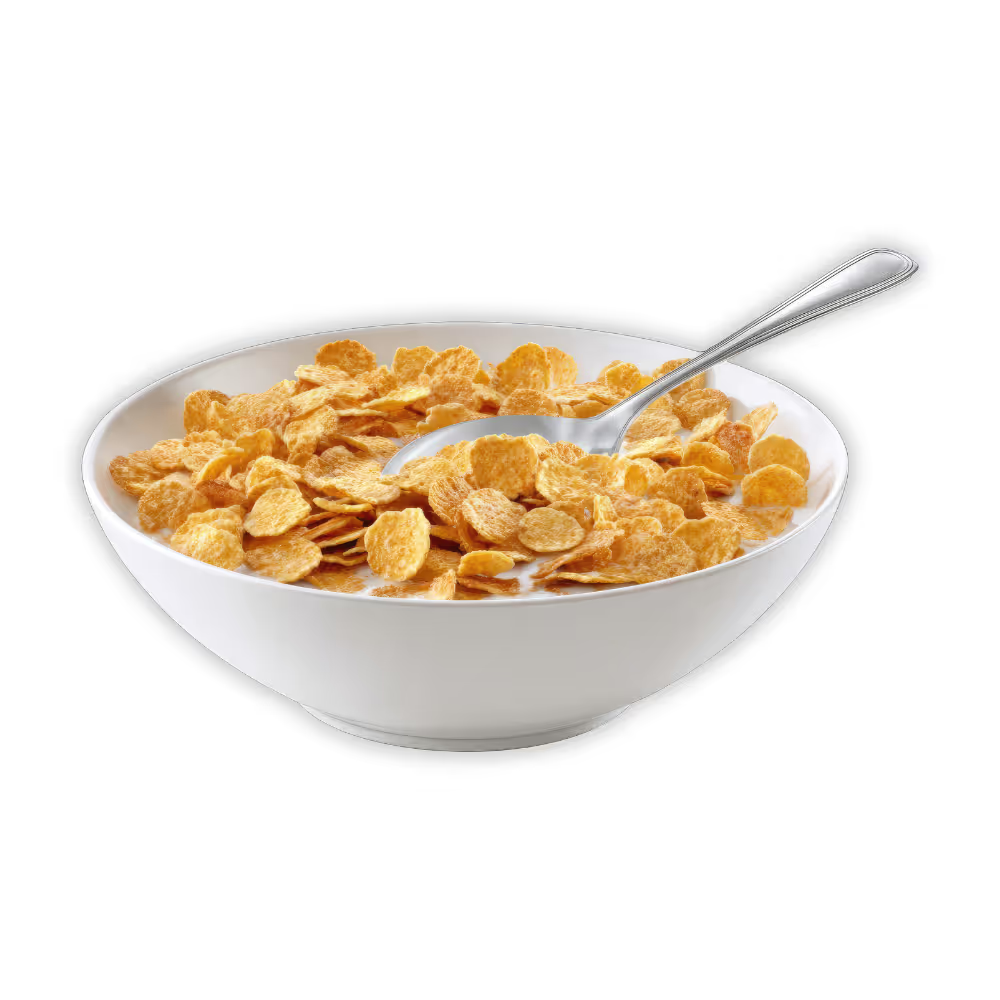
Format Specification
Cereals are the category most exposed to the synthetic-to-natural shift. Shoppers reading labels start at breakfast, and most fortified cereals still carry the synthetic vitamin blends that built the category. The reformulation opportunity is the largest in mainstream food.
Natural ingredients built for the cereal aisle
Three single-ingredient picks for breakfast cereal brands - the staple fortification nutrients that built the category, now from plant-derived sources that match the natural and organic positioning premium cereal brands compete on.

Iron (curry leaf)
The cereal fortification staple - now from a plant source rather than ferrous fumarate. Taste-neutral in flake, granola, and porridge bases.

Vitamin B12 (shiitake)
Critical for vegan and vegetarian-positioned cereals - the segment with the strongest plant-positioning growth. Heat-stable through extrusion.
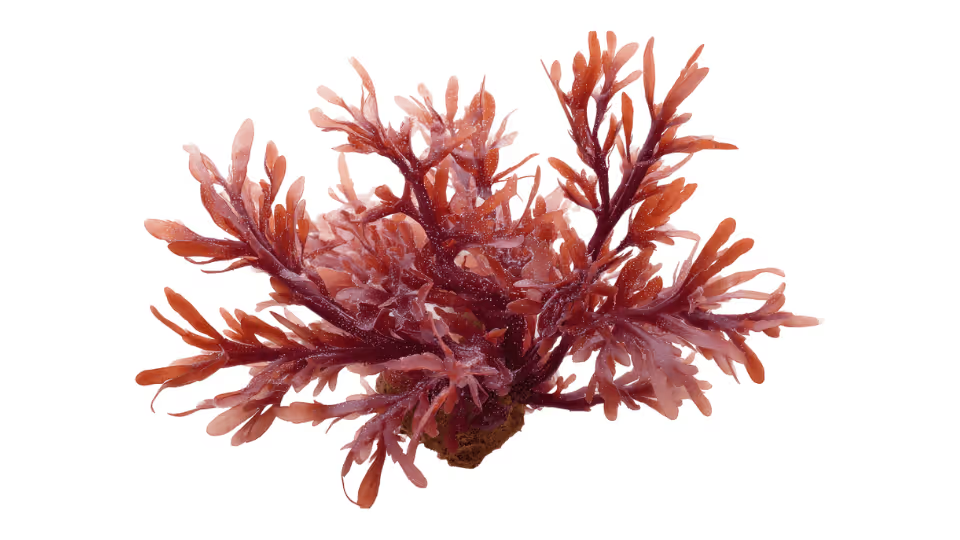
Vitamin D3 (lichen)
Heat-stable through extrusion and toasting. Replaces synthetic cholecalciferol on the declaration with lichen extract.
Three formulation-ready premixes for cereal brands
BIOVIT blends mapped onto the three commercial positions cereal brands compete on - daily-use breadth, premium full-nutrition coverage, and the morning energy claim that drives breakfast purchase. Each available off-the-shelf, with inclusion rates tuned per format by Eiméar.

Daily Support Premix
Eight-nutrient base for everyday cereal ranges - the most-adapted fortification spec for family, kids’, and mainstream cereal formats. Covers the foundational breakfast claim set in a single inclusion, with declarations that read as a short plant-source list rather than a synthetic vitamin panel.

Broad Spectrum
Multi-nutrient breadth for premium and whole-food cereal ranges where the brand is selling complete nutrition rather than a single claim. The blend behind live in-market proof at 18-month shelf life across granola and porridge formats.

Energy Premix
B12 and Iron paired to unlock the full energy and fatigue claim suite - normal energy-yielding metabolism, reduction of tiredness and fatigue, and normal oxygen transport. Built for morning-positioned cereals and breakfast biscuits where the energy claim is the commercial pull.
Take your cereal range from synthetic to natural
Samples dispatched within a week. Reformulation support included.
Frequently asked questions
Practical answers to the questions buyers and formulators ask most when specifying natural fortification for breakfast cereals - processing, format coverage, declarations, and reformulation routes.
Yes. BIOVIT ingredients are supplied as fine powders that integrate directly into cereal production at the dry-blend stage - no additional processing steps, no specialist equipment, and no changes to throughput or line speed.
Both are covered. Extrusion at 140-180°C and toasting up to 200°C are within the BIOVIT stability range with calculated overages. Eiméar builds the overage calculation per processing route - extrusion dwell time, toasting temperature, and target shelf life all factored in.
Yes. Dry blending works across the full breadth of cereal formats - cold-mixed mueslis, baked granolas, rolled-oat porridges, and extruded flake formats. The simpler the processing, the easier the fortification.
Vitamin D (lichen), Calcium (marine algae), and Iron (curry leaf) unlock the children-specific EFSA claims for bone growth, bone development, and cognitive development. Daily Support is the most-adapted blend for children’s cereal formats. See the Children’s Products application page for the dedicated approach.
Plant-source names rather than chemical codes: “shiitake mushroom extract,” “curry leaf extract,” “lichen extract.” For a shopper comparing your cereal to a synthetic-fortified competitor at the shelf-edge, the BIOVIT declaration reads as recognisably food rather than recognisably industrial.
Yes - reformulation is the most common starting point for cereal clients. Eiméar handles the synthetic-to-natural switch end-to-end: equivalence mapping per nutrient, declaration updates, label-claim compliance, and overage recalculations for the new ingredient matrix.
Single ingredients: 1 kg MOQ with an approximate 1-week lead time. Premix blends: 5 kg MOQ with an approximate 4-week lead time. Samples available on request - contact the team to specify quantity and shipping arrangements.
Reformulation support is included
Every BIOVIT wholesale order comes with full technical reformulation support at no extra cost, giving your NPD and technical teams direct access to a qualified nutritionist from brief to production.
Eiméar Sutton RNutr MSc, our Head of Nutrition, leads the technical work on every account: equivalence mapping against your incumbent synthetic, inclusion-rate modelling, on-pack claim wording aligned to GB and EU regulation, and the small details that decide whether a synthetic-to-natural switch lands cleanly on the production line.
The result: shorter development cycles, fewer reformulation rounds, and a finished product your commercial team can stand behind.